
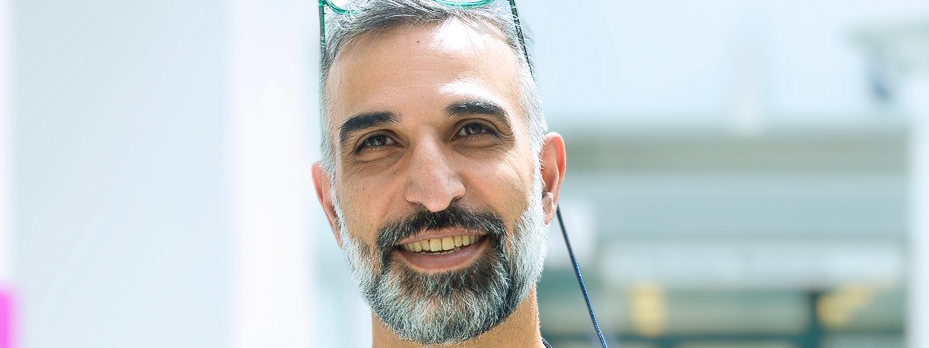
September 29 marks World Heart Day, a day dedicated to raising awareness of cardiovascular disease and promoting prevention. To celebrate some of the brilliant work being done in cardiac research, we sat down with Dr Owais Dar, a consultant cardiologist at Harefield Hospital with a particular interest in advanced heart failure.
His path into research
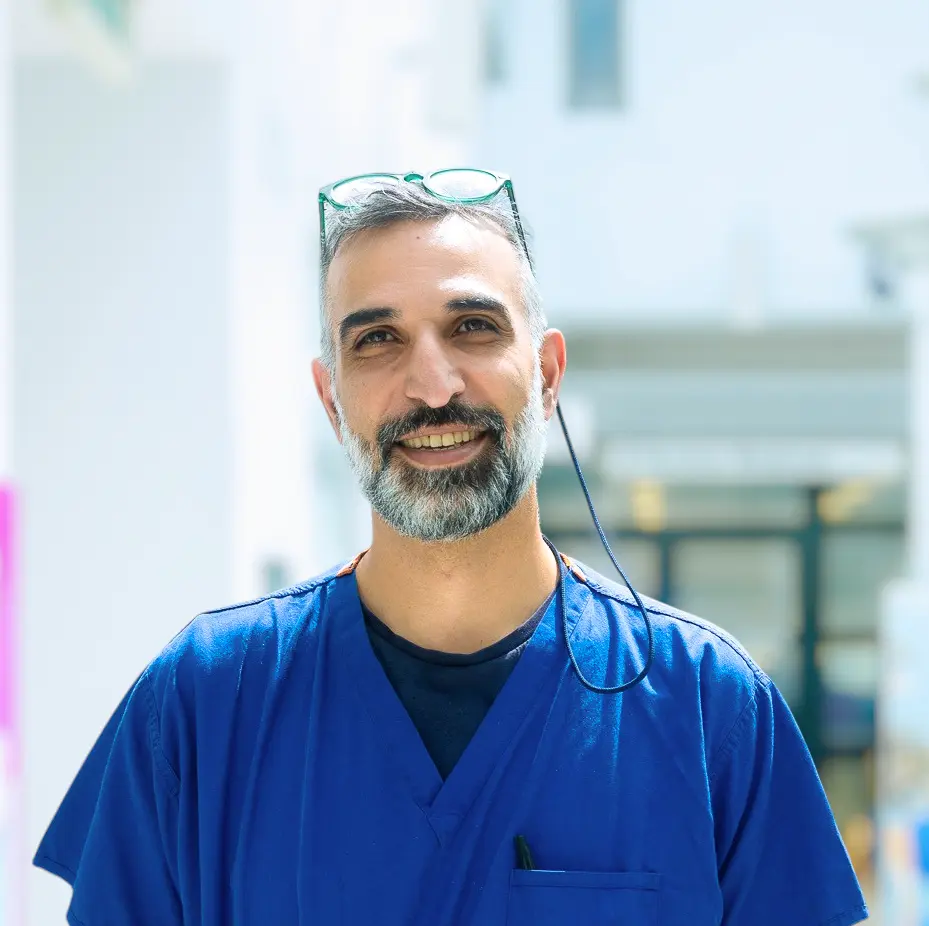 Owais told us that he had intended to specialise in cardiology from early in his training. Due to the highly competitive nature of the speciality, Dr Dar initially entered research partly as a way of strengthening his route into specialty training. He joined the National Heart and Lung Institute and spent around four years in research, completing a research degree, publishing papers and book chapters, and presenting internationally.
“During that time, research became more than a career requirement. I came to see it as an important part of becoming a better doctor,” he told us.
Dr Dar returned to clinical training, where his fellowship exposed him to advanced heart failure, transplantation and artificial hearts. His time at Harefield convinced him that transplantation was the area he wanted to pursue. He subsequently gained further transplant experience in Vienna and at Stanford University, before returning to Harefield as a consultant.
Once established clinically, Dr Dar gradually built his own research programme. His projects include investigating the use of PET imaging for transplant rejection; developing a blood test to help identify cardiac cachexia; developing and validating blood tests for transplant rejection; using patient data from West London to investigate factors linked to heart failure and spearheading a national audit conducted by the Transplant Cardiology Working Group (TCWG).
The findings from this audit are informing a programme of interventions being trialled to improve access to advanced heart failure and transplant services. His research portfolio spans several areas of advanced heart failure and transplantation, with a focus on improving diagnosis and patient care.
What drives his work
A strong theme for Dr Dar is solving clinical problems that he feels have not yet been adequately addressed. He described being particularly motivated when he sees a problem or opportunity in his clinical practice and thinks, “Why has nobody done this yet?”
He enjoys taking these initial ideas and generating enough evidence to turn them into something that could ultimately change patient care.
The project he’s most excited about
“The PET imaging work looking at non-invasive diagnosis of heart-transplant rejection.”
At present, rejection is diagnosed using a heart biopsy, which is invasive, resource-intensive and can potentially miss rejection because only a small section of the heart is sampled. Dr Dar is investigating whether FDG PET imaging, already used to identify cardiac inflammation, could be used to detect the immune response associated with transplant rejection. This would involve an imaging test that uses a radioactive sugar tracer to measure the activity of cells in the heart.
Although he anticipates that further studies will be needed over the next five to ten years to demonstrate its effectiveness, an initial human study produced encouraging results, and the team is now conducting a blinded study.
Dr Dar explained that this is the work he is most excited about, partly because it began as an idea he had held for years and was developed with relatively little funding. If subsequent studies support the early findings, he believes it could significantly change how transplant rejection is diagnosed.
The biggest barriers to research
“For me the two biggest barriers are time and funding.”
He currently has five research fellows and support from research nurses, but much of his own research activity is still completed in his own time, alongside his clinical work. He feels that dedicated research time and greater research assistant support would allow the team to achieve considerably more.
The second major challenge is the continual need to secure funding to move promising projects from one stage to the next.
His advice for researchers starting out
“It may sound like a cliché, but if you have an idea that you strongly believe in, pursue it. I recommend seeking advice from people with experience, asking others for help, being persistent and not allowing rejection to automatically convince you that an idea is wrong. Believe in good ideas strongly enough to see them through, while getting advice and support from others along the way.”
Thank you to Dr Dar for taking the time to share his research journey and insights with us.