

The UK’s only centre for minimally invasive VAD surgery
Harefield Hospital is home to one of the world’s most established ventricular assist device (VAD) programmes and we’re proud to be the only UK centre offering minimally invasive VAD surgery with the Abbott Laboratories device. Learn more from Mrs Maria Monteagudo-Vela, consultant cardiothoracic and transplant surgeon at Harefield Hospital, as she shares details of our minimally invasive VAD programme.
Harefield Hospital’s history of VAD expertise
Established in 1915, Harefield Hospital is world-renowned for treating some of the most complex advanced heart failure cases, with particular expertise in VAD surgery. Home to Europe’s first combined heart and lung transplant in 1983, we continue to lead the way in advancing care for heart failure patients through our pioneering minimally invasive VAD service. A VAD, a mechanical pump that helps a failing heart to circulate blood, is most often used for patients requiring a bridge to transplant.
With 30 years of VAD expertise, our team at Harefield Hospital began carrying out the procedure minimally invasively in 2010. Instead of performing a sternotomy to open the chest and implant the VAD, our team worked to develop a technique that allows VAD implantation with just 3 incisions in the torso, and a single incision in the groin.
As a highly experienced centre for VAD implantation, our team of specialists have further advanced and refined the techniques used, resulting in quicker operations and shorter patient recovery periods, while treating some of the most complex cases. Our team implant between 15-20 devices annually and are proud to be one of the largest VAD centres in the country, with many international medical teams visiting Harefield for training.
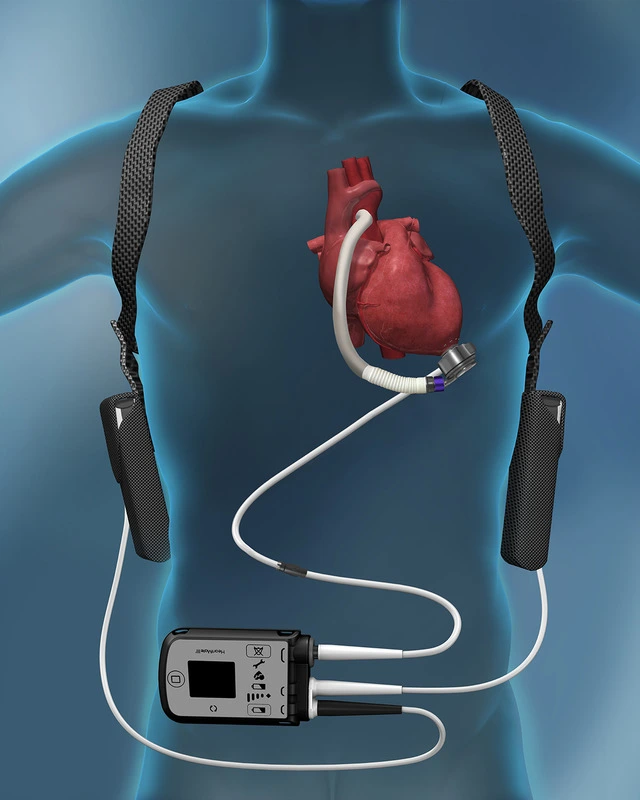
Ventricular assist device (VAD), image courtsey of Abbott Laboratories.
Who is suitable for minimally invasive VAD surgery?
Heart failure is a spectrum, ranging from mild symptoms that can be managed with lifestyle changes and medication, to advanced stages where the heart can no longer pump effectively. VAD surgery is typically recommended for patients at the more severe end who haven’t responded to medical treatment, or whose condition has worsened to a point that medications no longer take effect.
Our specialists often recommend VAD for patients awaiting transplantation, offering a temporary life-saving solution in the interim period. Our current overall survival rate in the first year after VAD surgery is 85%.
“Minimally invasive VAD surgery is suitable for most patients needing a VAD implantation,” explains Mrs Monteagudo-Vela. “Donor hearts are not readily available, so it can take time to find the right match for the patient – but a VAD is a life-saving measure in the meantime.” However, in some cases, when patients require valve repair or replacement or coronary bypass in the same procedure, minimally invasive VAD surgery would not be an option.
While minimally invasive VAD surgery is beneficial over open surgery for most patients requiring the procedure, it’s particularly advantageous for patients who have previously had open-heart surgery, as it avoids the need to re-enter the sternum again. This prevents any issues with adhesions and scar tissue which may remain following the patient’s previous open-heart procedure.
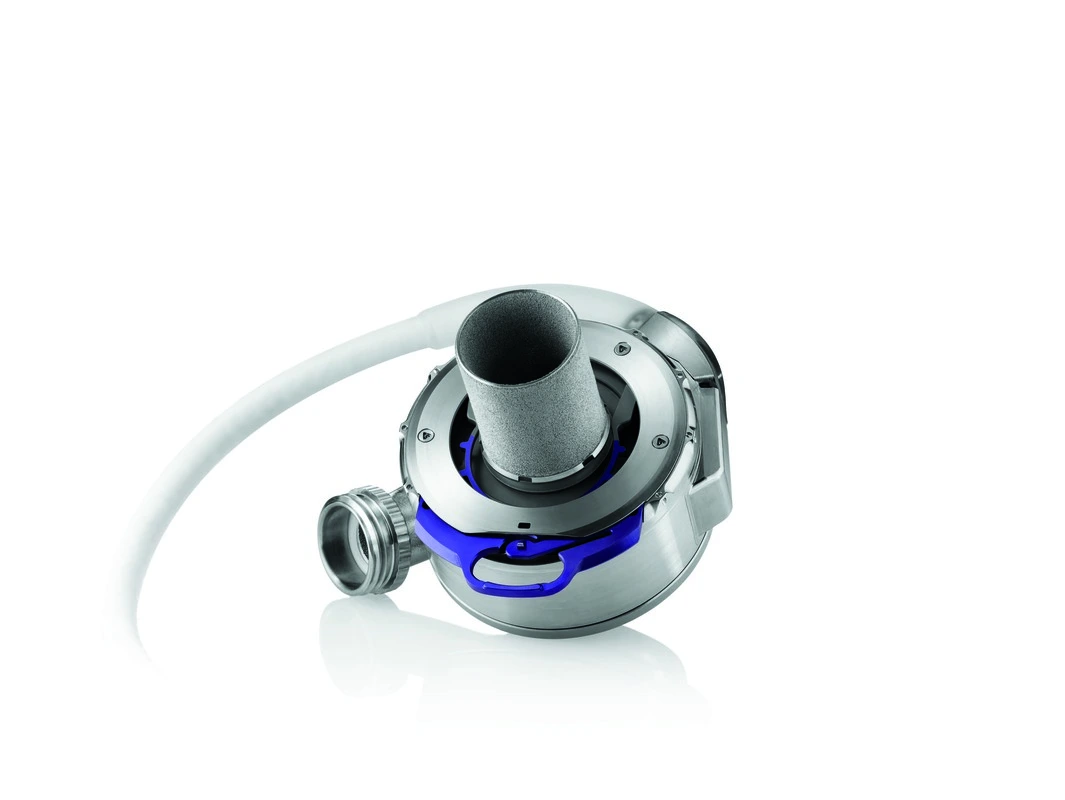
Ventricular assist device (VAD), image courtesy of Abbott Laboratories.
Improved patient recovery after VAD implantation
Minimally invasive VAD patients typically spend around 3 weeks in hospital following the procedure. Patients who have open VAD surgery, requiring the splitting of the sternum, often spend between 6 and 8 weeks in hospital. Not only do our minimally invasive VAD patients return home sooner, but they are more mobile and independent in a much shorter space of time.
“With just 3 small incisions made in the patient’s chest, another benefit of our minimally invasive VAD approach is a lower risk of infection,” explains Mrs Monteagudo-Vela. “Completing the minimally invasive procedure takes around the same time as the open surgery – around 4-5 hours – but the infection risk and bleeding is reduced, leading to improved recovery.”
Once the VAD procedure is complete, ongoing care is essential for long-term success. This involves regular check-ins with our team of 5 fully dedicated LVAD heart failure nurse specialists, participation in tailored cardiac rehab programmes, and access to 24-hour on-call cover provided by the same team, reflecting the comprehensive care that sets our unit apart.
Championing a multidisciplinary team approach
Our VAD programme has 3 advanced heart failure cardiologists, 5 senior fellows, and 7 VAD surgeons. Further to this, Harefield Hospital is home to a great number of specialists and, as part of the wider Guy’s and St Thomas’ NHS Foundation Trust, private patients receive expert care from teams across several areas.
Our VAD surgeons frequently collaborate with physicians, nurses, allied health professionals and psychologists, as well as with colleagues in nutrition and pharmacy teams, to deliver world-class care to patients.
We’re proud to have a team of specialist heart failure nurses at Harefield, who have extensive experience in caring for patients in all stages of heart failure, and make up part of our diverse, highly skilled team.
When to refer to us
Referral for VAD surgery as a bridge to transplantation should be considered for patients in advanced heart failure, with persistent severe symptoms or dependence on inotropes. Patients who are not stable enough to wait for a donor heart with medical therapy alone should be referred to our specialist team at Harefield Hospital, where our consultants can assess their suitability for minimally invasive VAD surgery.
To refer a patient, please contact the Guy's and St Thomas' Specialist Care team.

Mrs Maria Monteagudo-Vela
Consultant cardiothoracic and transplant surgeon
Mrs Monteagudo-Vela is highly specialised in minimally invasive aortic surgery, surgical therapy for heart failure, heart and lung transplantation, and mechanical circulatory support. She is the cardiothoracic surgical lead for transplantation and mechanical circulatory support at Harefield Hospital.